Foundations of Organic Chemistry Chapter 4: Stereochemistry
Chapter 4: Stereochemistry
The Importance of Shape
Estimated reading time: 4 min
In this chapter
- Introduction
- Why Shape Matters
- Important Concepts
- Chirality
- Enantiomers
- Diastereomers
- R/S Configuration
- Conformations
- Conformational Analysis
- The Chair Conformation
- Axial and Equatorial Positions
- Ring Flipping
- Why Equatorial Is Preferred
- Visual Thinking
- Gentle Exercises
- Self-Assessment
- Further Study
- Reading
- Videos
- Supplementary
- Looking Ahead
Introduction
Organic molecules exist in three dimensions.
Two molecules may possess identical atoms and bonds yet behave very differently because of their arrangement in space.
Stereochemistry provides a framework for understanding these differences.
Why Shape Matters
Shape influences:
- physical properties,
- biological activity,
- intermolecular interactions,
- and chemical reactivity.
Biological systems are especially sensitive to molecular shape.
Important Concepts
Chirality
Objects that are not superimposable upon their mirror images.
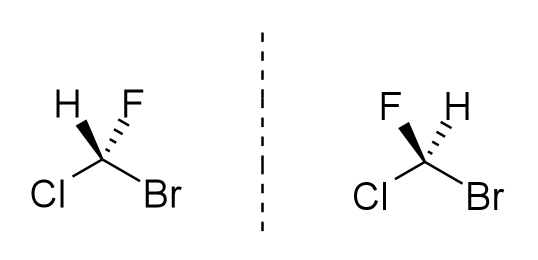
Enantiomers
Mirror-image molecules.
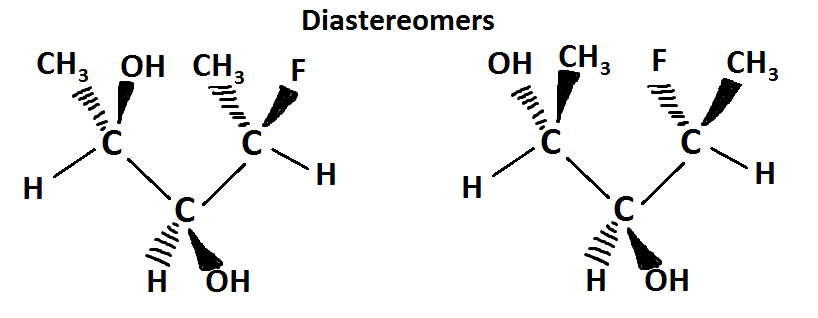
Diastereomers
Stereoisomers that are not mirror images.
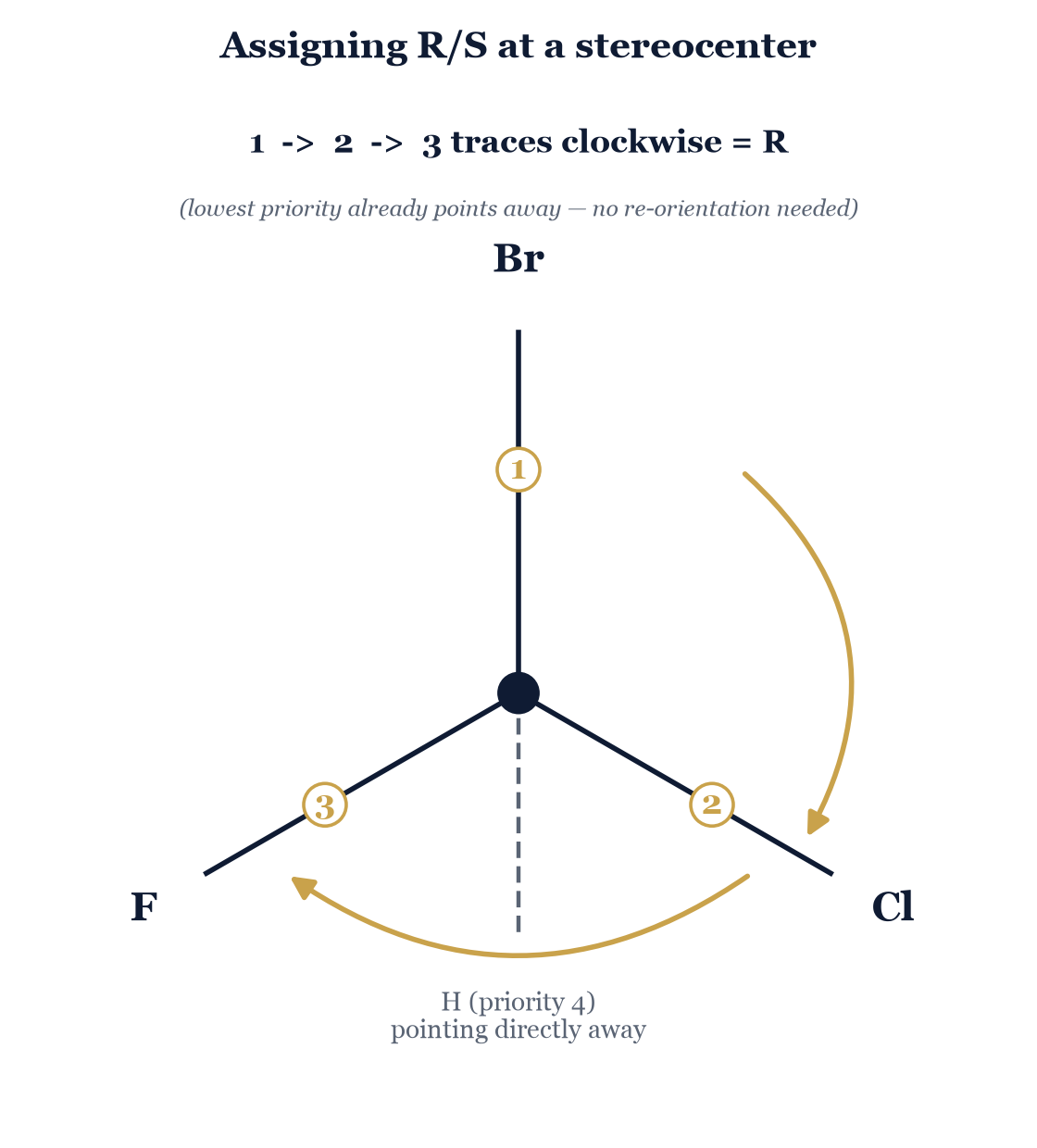
R/S Configuration
A system for describing stereocenters.
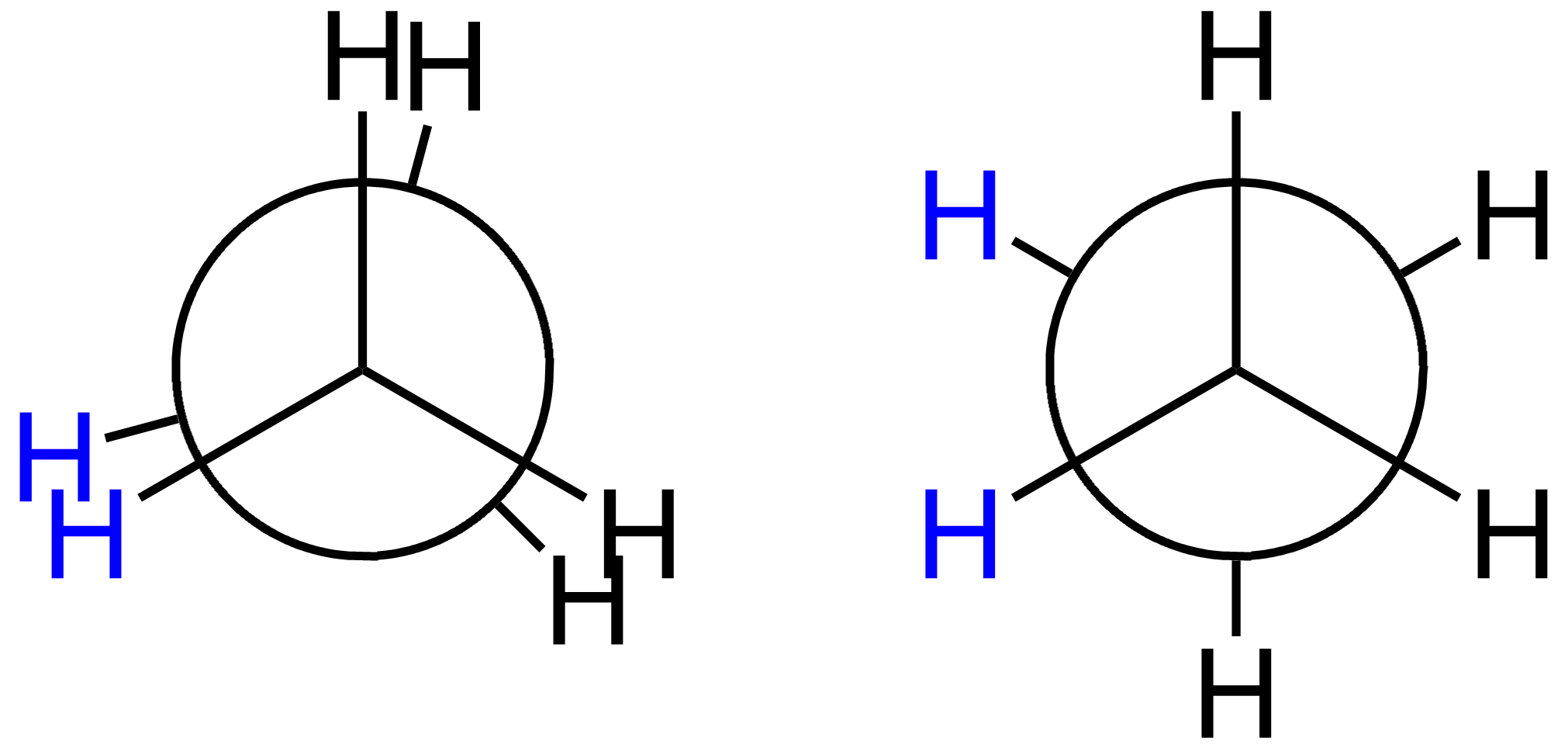
Conformations
Different spatial arrangements produced by bond rotation.
Conformational Analysis
Bond rotation lets the same molecule adopt many different three-dimensional shapes without breaking any bonds. Unlike stereoisomers, different conformations interconvert freely at room temperature.
The Chair Conformation
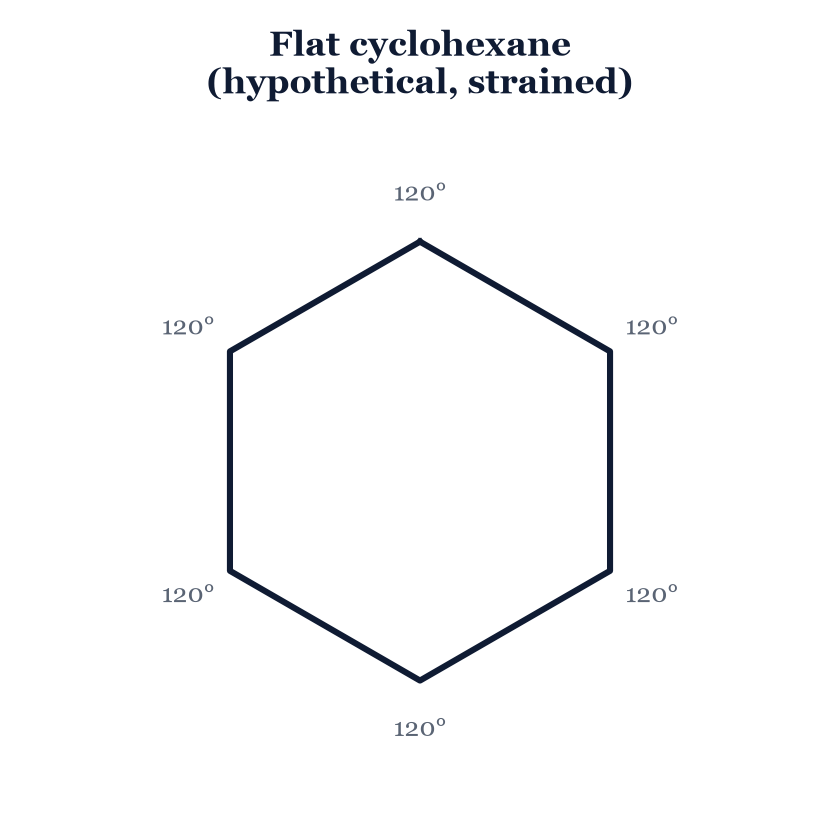
A flat, hexagonal cyclohexane ring would suffer from angle strain (its bond angles would be forced to 120°, away from the preferred 109.5°) and eclipsing interactions between neighboring hydrogens. Puckering the ring into a chair relieves both problems: every bond angle relaxes to near 109.5°, and every neighboring pair of hydrogens becomes staggered. The chair is the most stable conformation of cyclohexane.

Axial and Equatorial Positions
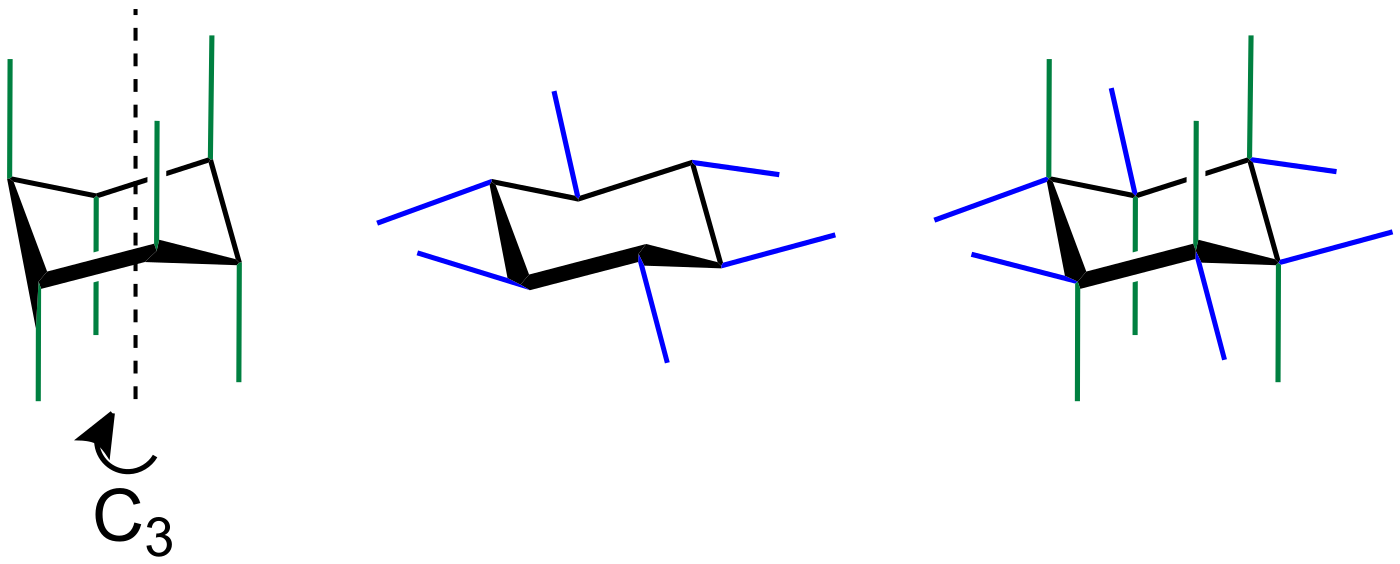
Each carbon of the chair holds two positions, pointing in different directions:
Axial — perpendicular to the average plane of the ring, alternating up and down around the ring.
Equatorial — roughly in the plane of the ring, pointing outward.
Ring Flipping
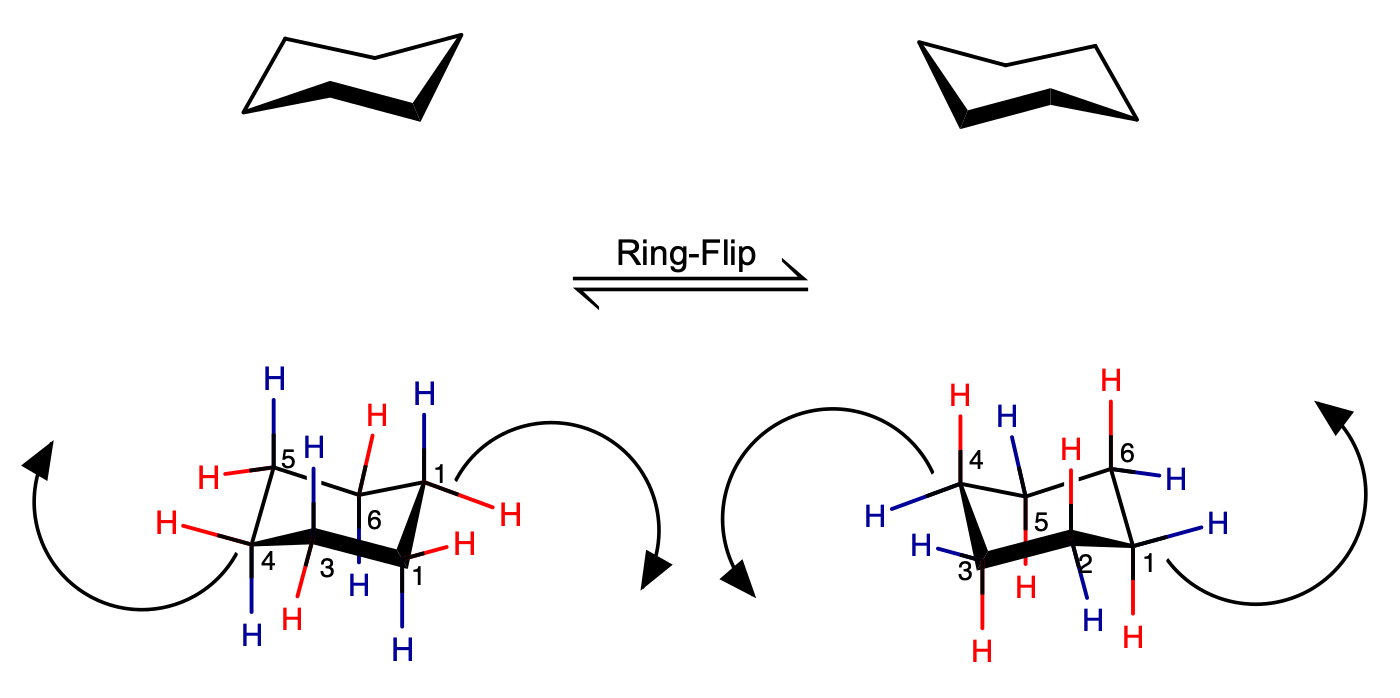
A chair can invert into another chair through a continuous rotation of its bonds — a ring flip. Ring flipping converts every axial position into an equatorial position and every equatorial position into an axial one, but it does not break bonds or change configuration at any stereocenter.
Why Equatorial Is Preferred
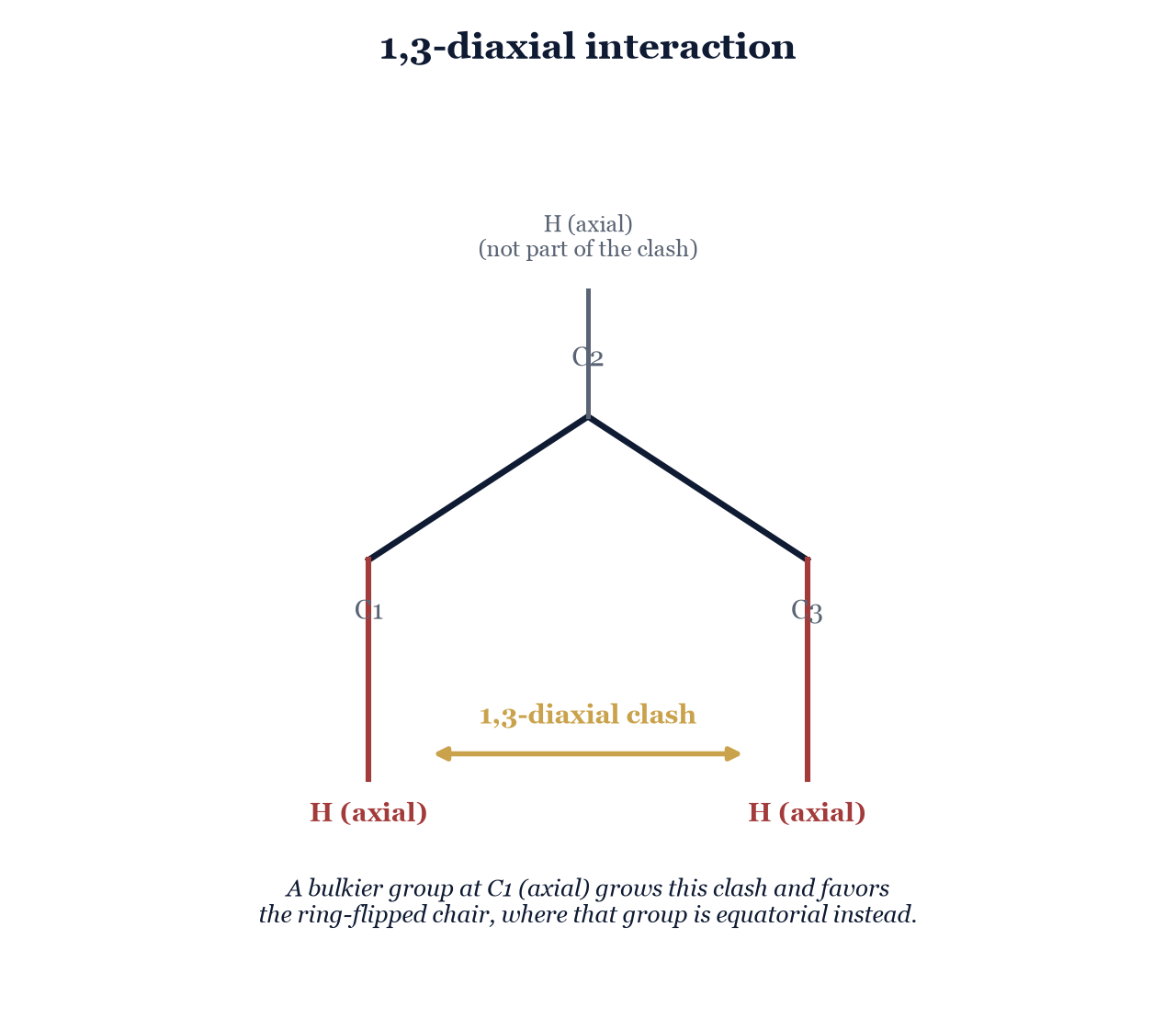
An axial substituent points toward the axial hydrogens two carbons away on the same face of the ring. These 1,3-diaxial interactions are a steric strain that grows with the size of the substituent. Because ring flipping is fast and reversible, a substituted cyclohexane exists as an equilibrium between two chairs, and the chair that places the larger substituent equatorial is generally favored.
Visual Thinking
Stereochemistry is inherently visual.
Students benefit greatly from:
- drawing structures,
- using model kits,
- rotating molecules,
- and practicing repeatedly.
Gentle Exercises
Identify:
- chiral centers,
- enantiomeric pairs,
- molecules possessing symmetry.
Draw:
- a cyclohexane chair conformation with axial and equatorial positions labeled,
- the result of a ring flip on a substituted cyclohexane.
Self-Assessment
I can:
☐ Recognize chiral centers.
☐ Distinguish enantiomers from diastereomers.
☐ Appreciate the importance of molecular shape.
☐ Understand the value of molecular models.
☐ Draw a cyclohexane chair and identify axial and equatorial positions.
☐ Explain why bulkier substituents favor the equatorial position.
Further Study
Reading
LibreTexts Organic Chemistry — Ch. 5, Stereochemistry at Tetrahedral Centers — Chirality; stereochemistry; conformations.
Videos
Organic Chemistry Tutor — Chirality; R/S configuration; chair conformations.
Khan Academy — Organic Chemistry — Chirality; stereoisomers.
Supplementary
Master Organic Chemistry — Chirality; stereochemistry.
Looking Ahead
Shape influences chemistry.
But reactions themselves are governed by the movement of electrons.
The next chapter introduces electron flow and mechanistic thinking.
Common Mistake — Trying to Visualize Everything Mentally
Common Mistake — Confusing Conformations with Configurations