Synthesis and Strategy Chapter 21: Retrosynthesis and Multi-Step Synthesis
Chapter 21: Retrosynthesis and Multi-Step Synthesis
Working Backward
Estimated reading time: 1 min
In this chapter
Introduction
Beginning students often view reactions individually.
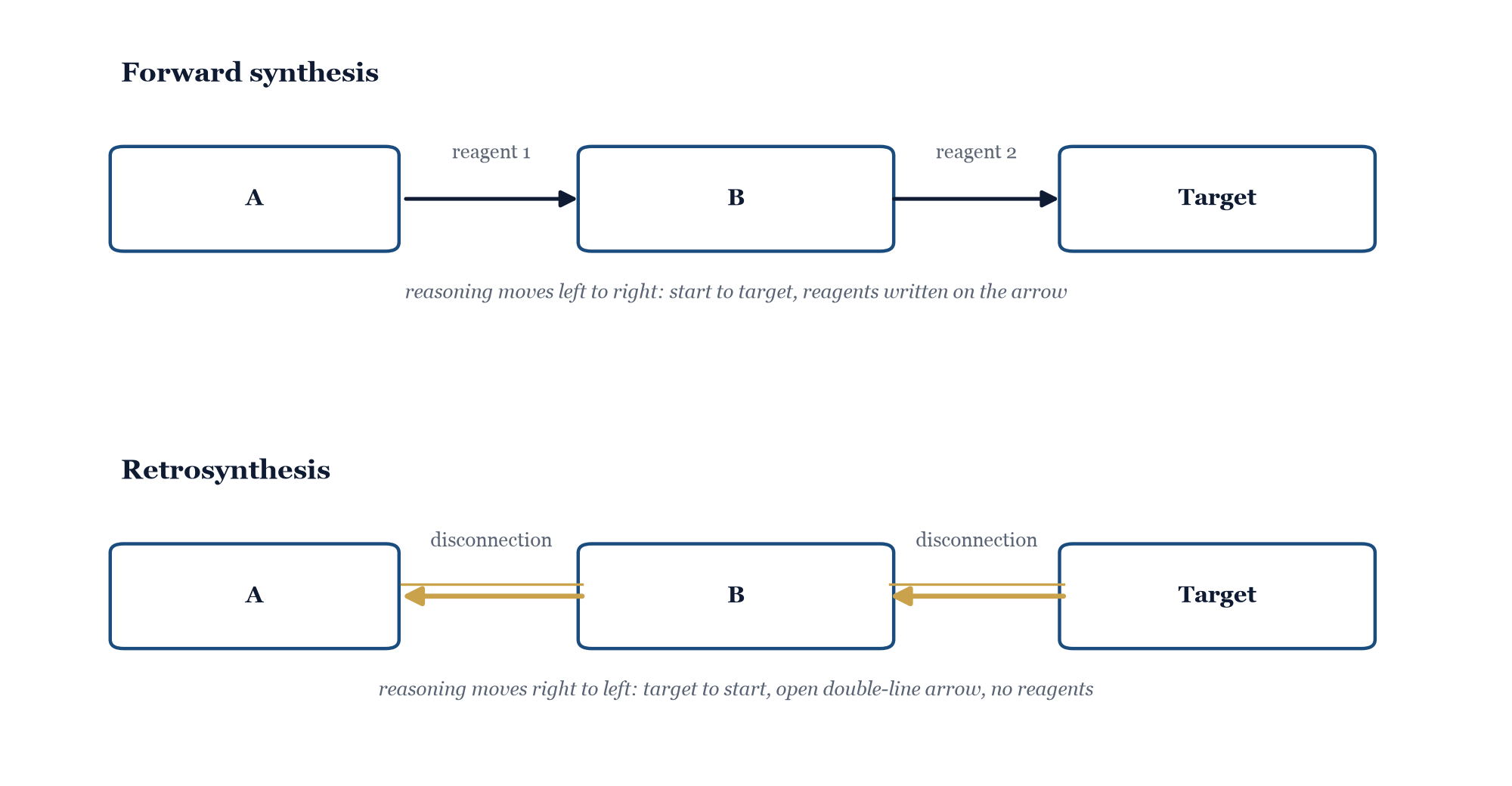
Experienced chemists frequently think in reverse.
Instead of asking “What product will this reaction produce?” they ask “How might this product be constructed?”
This process, known as retrosynthesis, allows complex molecules to be broken into simpler pieces.
Functional Group Transformations
Many syntheses rely upon converting one functional group into another.
Common transformations include:
- alcohols to carbonyl compounds,
- alkenes to alcohols,
- carboxylic acids to esters,
- and carbonyl compounds to alcohols.
Thinking in terms of transformations helps organize synthetic pathways.
Multi-Step Synthesis
Complex targets often require several reactions.
Planning these sequences requires attention to:
- order of reactions,
- functional group compatibility,
- selectivity,
- and efficiency.
Thinking Backward
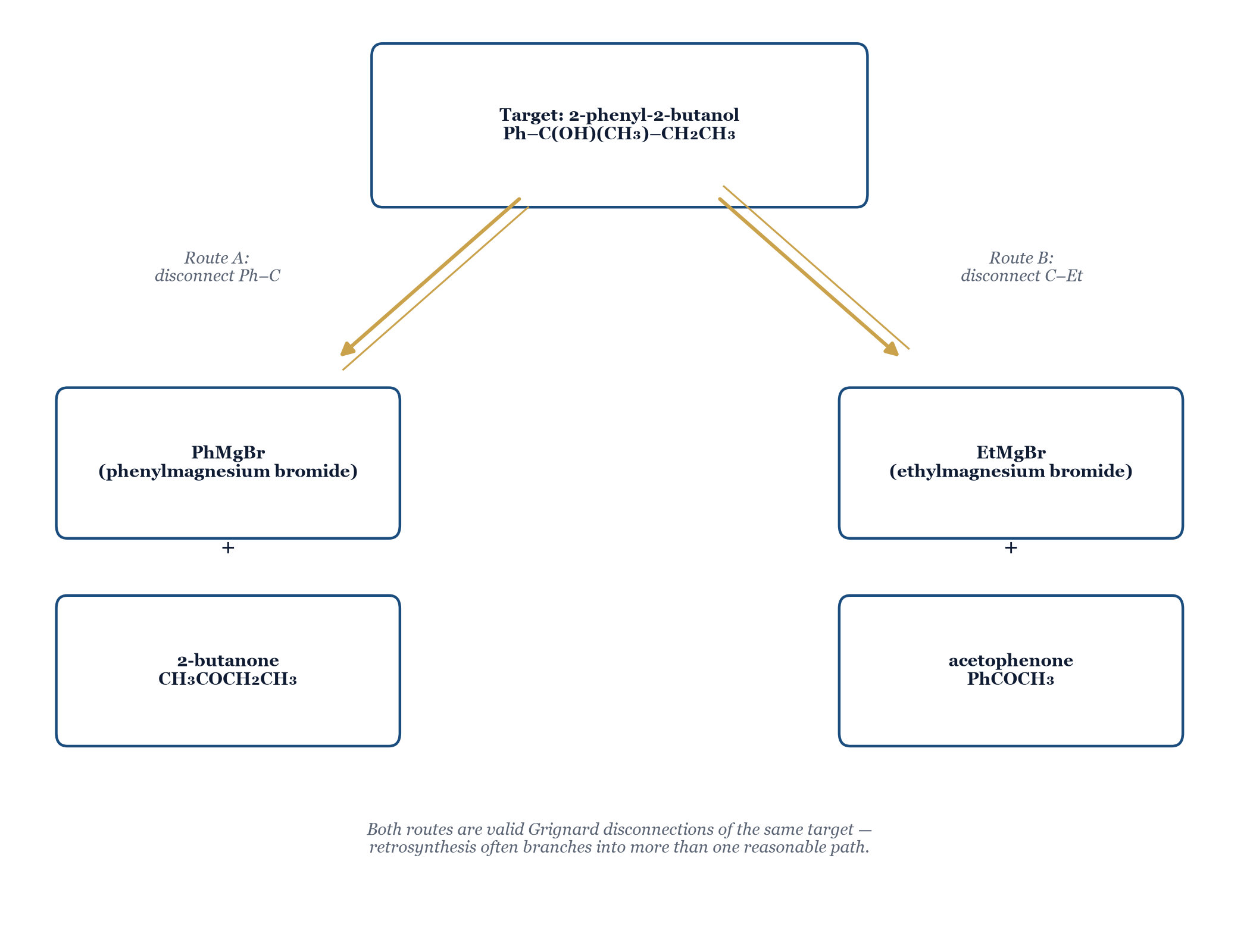
Retrosynthesis emphasizes:
- simplifying structures,
- identifying useful intermediates,
- and recognizing familiar patterns.
The process resembles solving a puzzle in reverse.
Self-Assessment
I can:
☐ Explain the logic of working backward from a target molecule.
☐ Identify functional group interconversions useful in synthesis.
☐ Describe the considerations involved in planning a multi-step sequence.
Looking Ahead
Synthetic planning often relies upon recurring strategies and familiar reaction patterns.
Common Mistake — Thinking Only Forward
Common Mistake — Treating Reactions Independently