Aromatic Chemistry Chapter 16: Electrophilic Aromatic Substitution
Chapter 16: Electrophilic Aromatic Substitution
Preserving Aromaticity
Estimated reading time: 1 min
In this chapter
Introduction
Unlike ordinary alkenes, aromatic compounds generally avoid addition reactions.
Addition would destroy aromatic stabilization.
Instead, aromatic compounds typically undergo substitution reactions that preserve the aromatic ring.
These reactions are collectively known as electrophilic aromatic substitution.
The General Pattern
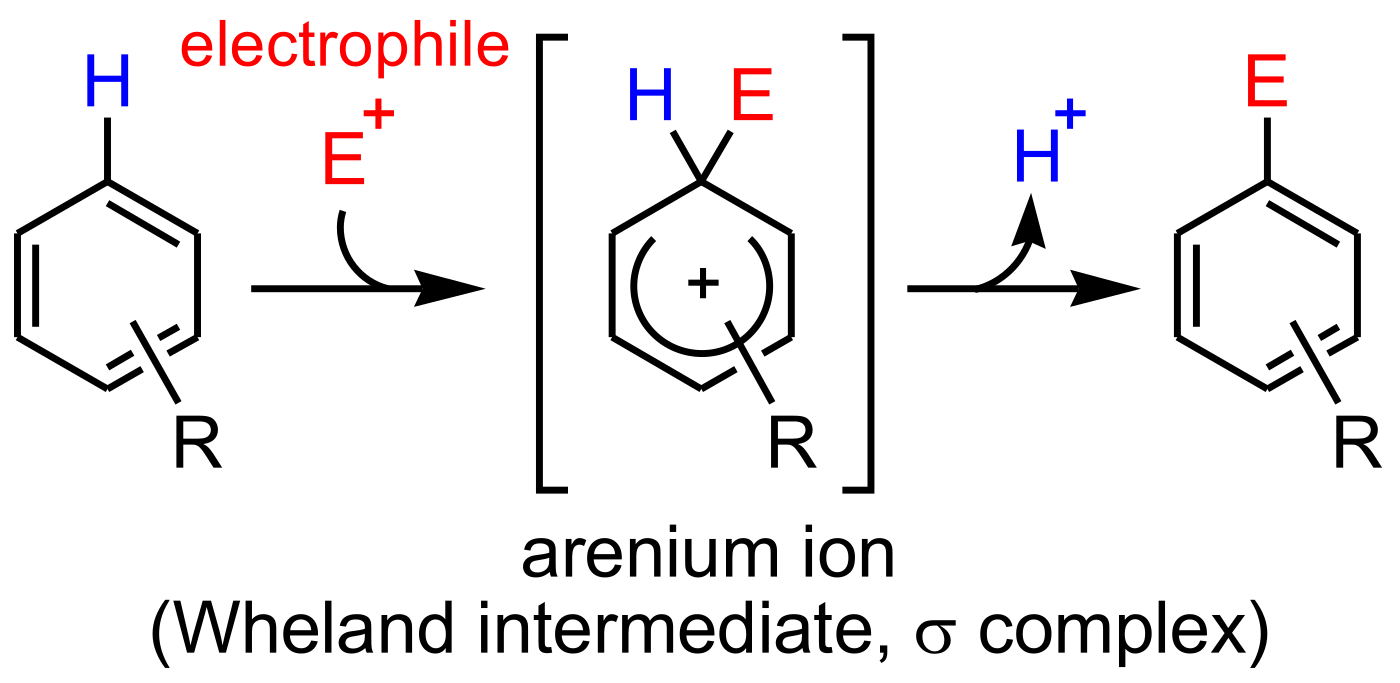
Electrophilic aromatic substitution follows a recurring sequence:
- Formation of an electrophile.
- Attack by the aromatic ring.
- Temporary loss of aromaticity.
- Restoration of aromatic stabilization.
Preservation of aromaticity is the driving theme behind these reactions.
Common Reactions
Halogenation
Introduction of halogens.
Nitration
Introduction of nitro groups.
Sulfonation
Introduction of sulfonic acids.
Friedel-Crafts Reactions
Formation of carbon-carbon bonds.
Thinking About Aromatic Reactions
Helpful questions include:
- Which species is the electrophile?
- How is aromaticity temporarily disrupted?
- How is aromaticity restored?
Self-Assessment
I can:
☐ Explain why aromatic rings undergo substitution rather than addition.
☐ Walk through the general EAS mechanism: electrophile formation, ring attack, temporary loss and restoration of aromaticity.
☐ Identify halogenation, nitration, sulfonation, and Friedel-Crafts reactions as EAS.
☐ Recognize that identifying the electrophile is the first step in any EAS problem.
Looking Ahead
Not all aromatic compounds react identically.
Substituents already attached to the ring influence both reactivity and orientation.
Common Mistake — Treating Aromatic Reactions Like Alkene Reactions
Common Mistake — Forgetting to Identify the Electrophile First